


The Second Story of Maggie

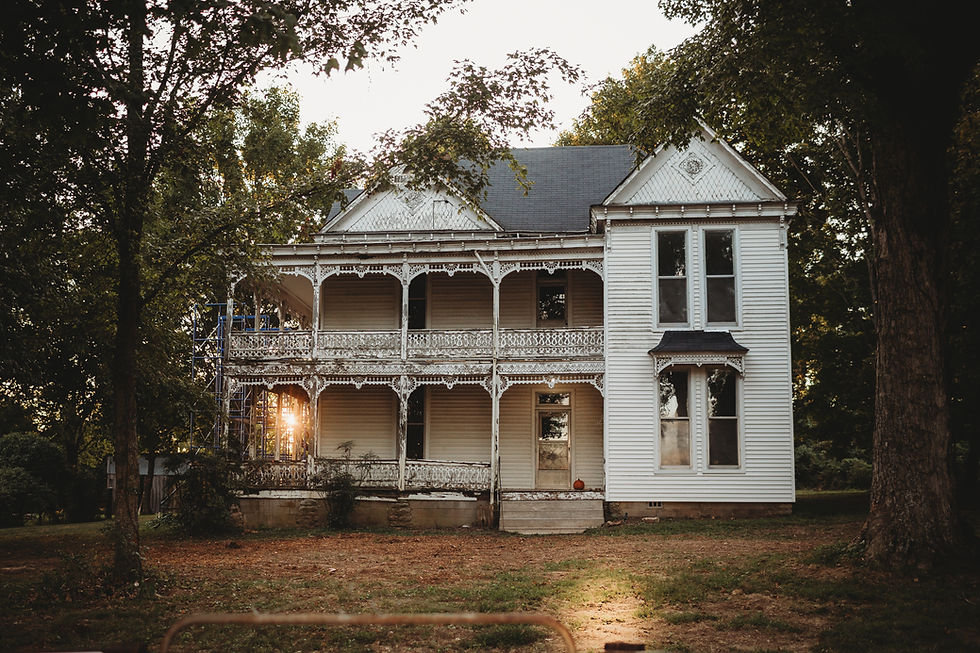
What We Found Upstairs in our 1898 Victorian Farmhouse
This post may contain affiliate links, which means I may earn a small commission if you choose to make a purchase through them, at no additional cost to you. I only share products we have used, love, or would genuinely recommend as you begin your own reorigination.

We spent a lot of time downstairs.
Peeling back layers. Figuring out what stayed, what went, and what had been added somewhere along the way. If you’ve read through our demo phase and the room-by-room breakdown, you already know… it was a process.
By the time we came up for air, we had a pretty good handle on Maggie’s main floor. How it worked. What felt original. What had clearly been changed.
And then we went upstairs.
The footprint felt familiar… but it felt like we had stepped into a completely different house.
And honestly, a different era.
It felt untouched in a way the downstairs didn’t. Like time had moved on everywhere else and just paused up there. A little worn. A little overlooked. Not layered in the same way.
Downstairs, we were working through layers to get to the original story.
Upstairs, it felt like we were already standing in it.
And the more we learned about historic homes, architecture, and how these spaces were actually used (books and resources), the more this started to make sense.
If you’ve read our breakdown on what defines a Victorian farmhouse, this is exactly where that separation between public and private space starts to show up.
Why the Upstairs Feels Different
In late 19th century Victorian farmhouses, the first and second floors were built with different purposes in mind.
The main floor carried the public side of the home. Cooking, gathering, hosting. It’s where you see more intentional trim work, symmetry, and spaces that were meant to be seen.
The second story was more private. More practical. It had a different job.
And you can see that play out in how the upstairs was finished.
Not every room was treated the same way. Some spaces were painted or wallpapered. Others were left much more minimal, sometimes just the base material itself. It wasn’t about consistency. It was about what the space needed to be. These rooms were often simply referred to as "chambers,"a simple name for spaces that shifted depending on what was needed.

The layout followed that same idea.
Before heating and cooling systems, airflow mattered. Hallways, door placement, and access to porches all worked together to move air through the house.
And not every room upstairs was meant to function as a finished living space.
Some were purely utilitarian. Storage. Overflow. In some homes, even food storage depending on how the house was set up. Spaces that served a purpose, but weren’t meant to feel finished in the same way as the rest of the house.
So when the upstairs feels a little inconsistent or like it doesn’t fully match what’s happening below, that’s not something that happened later.
It was built that way on purpose.
So what did we actually find upstairs in Maggie?
Let’s hop back on the bus. This time, we’re heading upstairs.
The Hallway
I’m not going to lie, the upstairs of Maggie was intimidating.
It's stripped down in a way the downstairs wasn’t, and honestly… it was a little unsettling. Mostly because she was so dark.
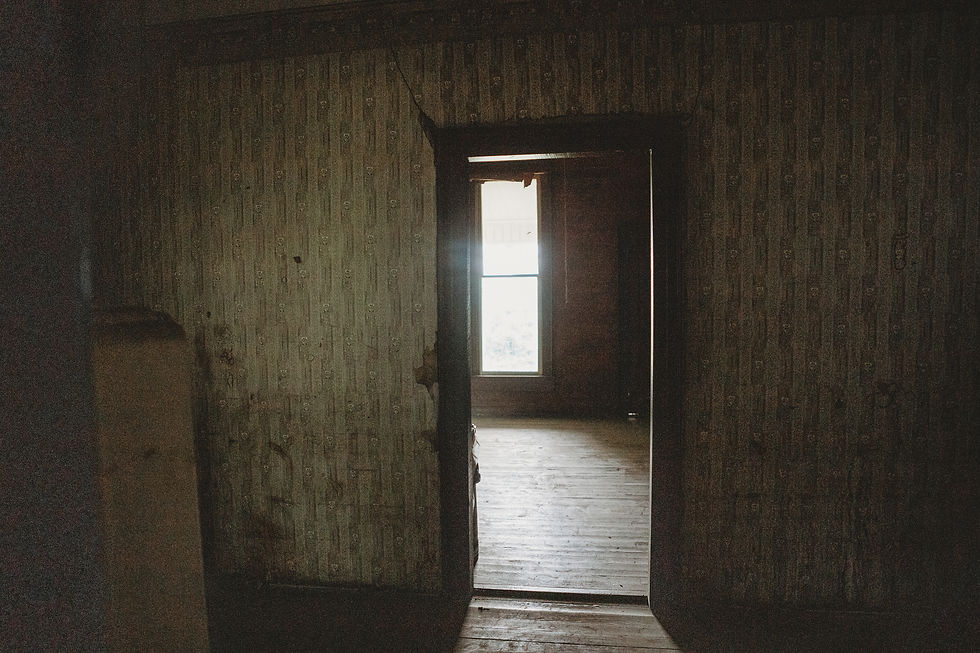
No modern updates had made their way up here. No electricity, no added lighting. Everything depended on whatever natural light could come through the windows and doors.
The main light source here pours in at the far end of the hallway from the front second-story door. It’s another more decorative Eastlake-style door, painted and slightly more refined than the rest of the space. It was a crown jewel to a hallway that felt…big.
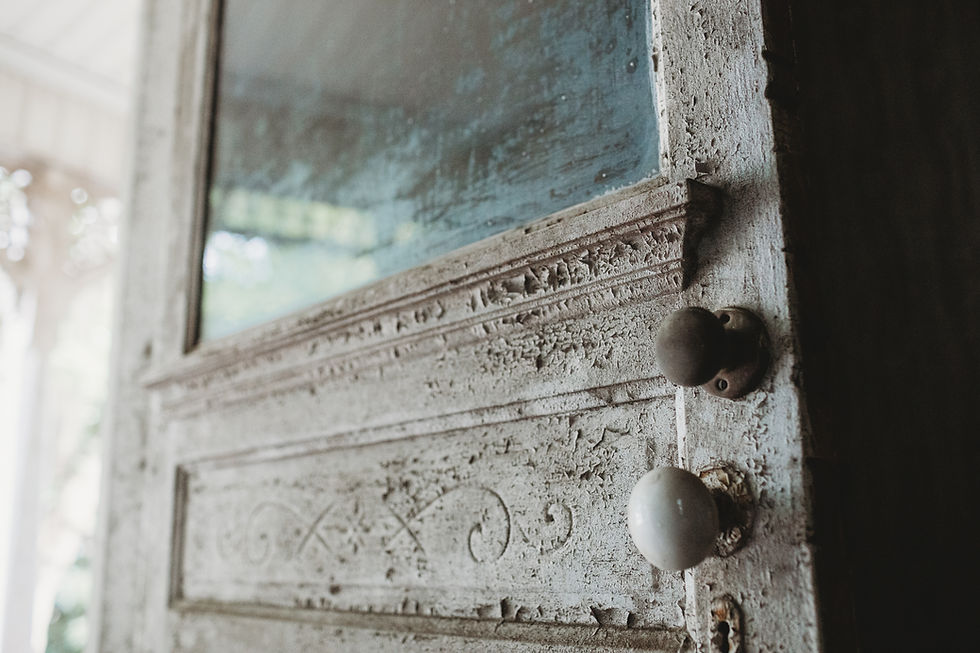
It’s wider than you’d expect, and somehow with just as tall of ceilings as downstairs, scaling over 10 feet. The original pine floors were still in place, along with the tongue and groove walls. The hallway had been wallpapered at some point, with a couple layers still hanging on, but nothing like what we had uncovered downstairs.
The next real difference was seen at the top of the stairs.
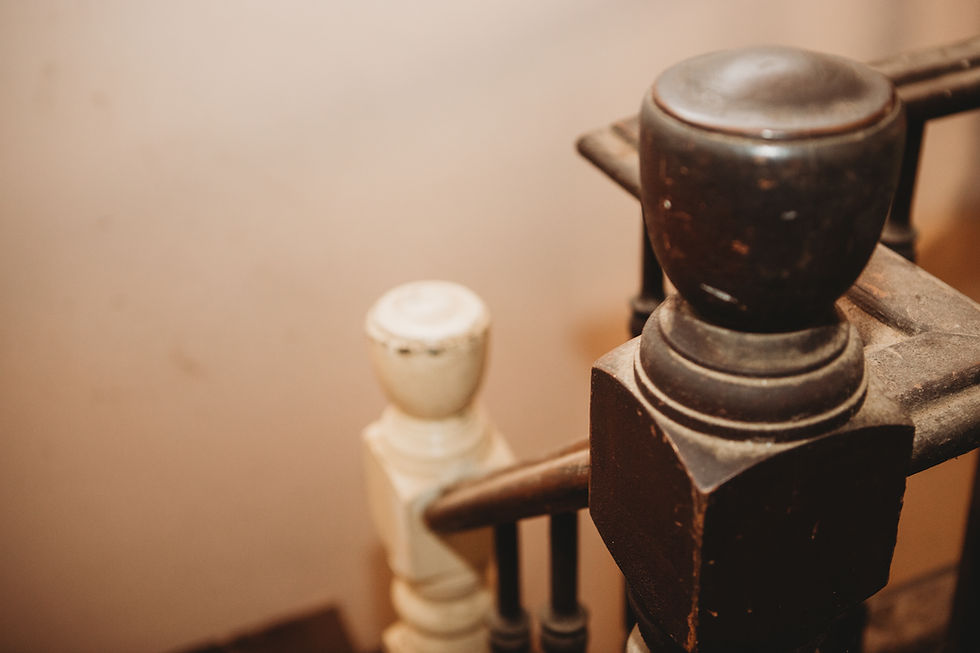
The painted stair railing stopped as soon as we rounded the corner. The last few feet were all exposed wood. The rail and spindles were left natural, several of them missing altogether, and the railing itself was built pretty short.
Between the lack of height and the missing pieces, it was not a spot to get too comfortable around. (So yes… hands and feet inside the bus kids!)
It was one of those clear space distinctions.
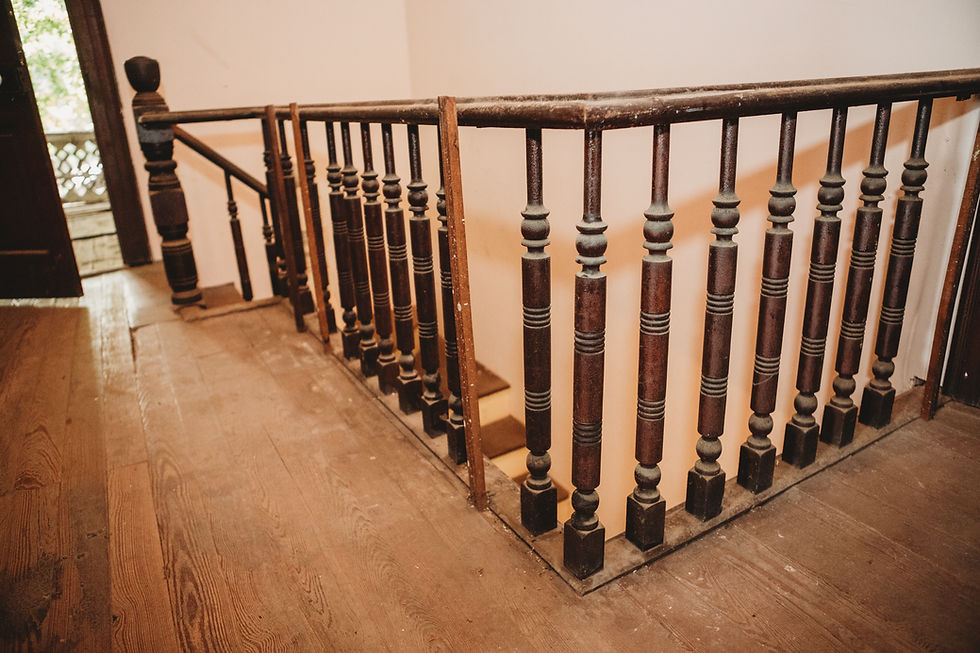
Downstairs felt finished. Painted. Intentional.
Upstairs was simpler. Rougher. Just enough to function.
And then it was hard not to notice what was sitting right in the middle of the hallway.
A refrigerator.
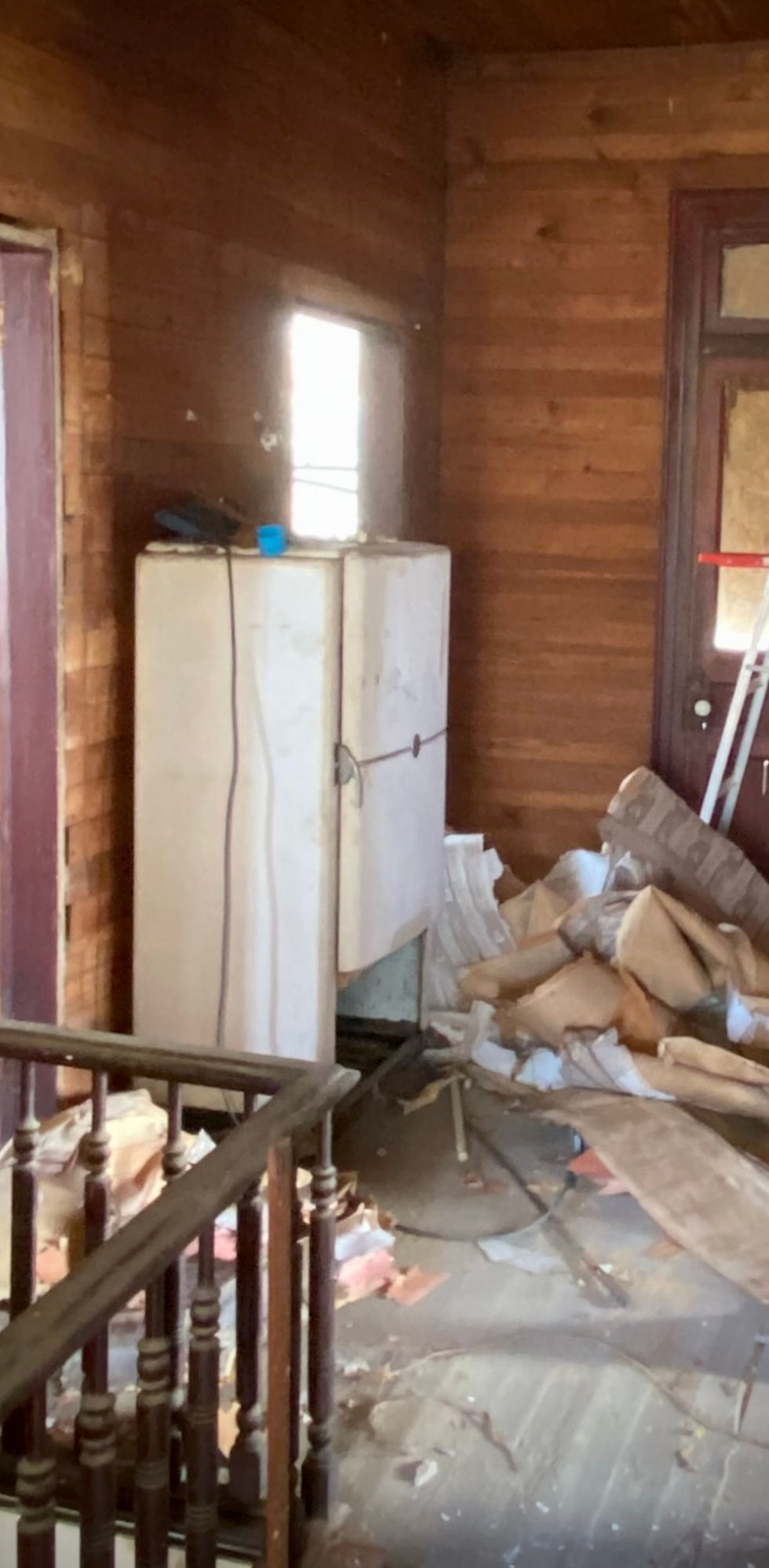
Yes. A REFRIGERATOR. (Did college boy JM design this space?)
Not exactly something you expect to find upstairs, let alone in a hallway. But hey, remember, this isn’t about aesthetics up here. The more we thought about how this space had been used, the more it made sense. A lot of Maggie’s second story had clearly been used for storage over time, and that included food storage.
Of course, curiosity got the best of us.
We opened it.
And yes… there were canned goods still inside.
We’ll just say those are permanently burned into memory (and nostrils) and leave it at that.
The refrigerator itself was an old, broken, retro unit that had clearly been sitting there for a long time, and getting that thing out was a whole separate challenge.
It wasn’t something we planned to reuse in this space or downstairs, but we did make sure it found a new home. (Although, I’d be lying if I didn’t pause and think about the convenience of midnight snacking if we left this upstairs…)
Other than that, there really wasn’t much to remove up here. Just the remaining wallpaper.
And the stair railing… well that’s still a problem we’re working through.
The Back Porch
At the opposite end of the hallway, just to the right of the stairs, was a solid door with a transom above it.
That door opened out onto a small back porch.
This wasn’t an enclosed space. It was open to the air, with a gingerbread railing along the edge.

And it had definitely seen better days.
The railing and decorative details were still there in pieces, but a lot of it was failing or already missing. It was clear this area had been exposed to the elements for a long time.
But the placement of it made sense.
Homes like this were designed to move air through the space. With a door at the back and another at the front of the hallway, along with access to the porch from multiple rooms, air could travel straight through the second story.
It wasn’t just for access. It was part of how the house functioned.
Off of that porch was another door.
This one looked even worse.
Weathered, worn down, and barely holding together. The kind of door you hesitate before opening… but of course, we did anyway.
Behind it was what we came to call the potato room.
From a demo standpoint, this entire area was less about uncovering and more about carefully taking apart what was left.
On the porch, we removed layers of plywood that had been added over time to reinforce the floor. We also carefully removed and set aside any remaining gingerbread details and brackets that could be salvaged.
Unlike other areas of the house, this wasn’t something we were trying to preserve as-is.
The plan here is a full rebuild.
This space will eventually be reframed and reworked into a bathroom for the upstairs, since there were none originally.
So while most of the structure will be replaced, the goal was to save as much of the original architectural detailing as possible.
That was really the only part worth holding onto.
The Potato Room
Wait… did we say something about potatoes?
Yes.
Off the porch was what we came to call the potato room. And it was easily the most unfinished, unglamorous space in the house.

This is where that utilitarian purpose really showed up.
Unlike the other rooms upstairs, which all had at least two windows and felt more balanced, this space was noticeably darker. There was only one window, and it wasn’t doing much.
It also wasn’t connected to the rest of the interior in the same way.
The only way into this room was from the porch. You couldn’t access it directly from inside the house, which made it feel even more separate from everything else upstairs.
And that actually makes sense.
Before refrigeration, homes relied on cool, dry, low-light spaces to store food. While root cellars were common, rooms like this could serve a similar purpose. Tucked away, limited light, good airflow from the porch, everything about it worked in favor of storage.
Inside, there were no finished tongue and groove walls. Just exposed studs and the exterior boards from the inside. No ceiling either. It went straight up into the rafters of the attic.
One wall had been partially finished, with boards nailed in place to create a makeshift ladder leading up to the attic space.

That was the room.
From a demo standpoint, there wasn’t much left to uncover.
The window was broken and missing parts, so that will need to be restored or replaced. The floors were something we hoped to save, but they were covered in debris and signs of animals, so we’ll have to see what’s actually salvageable.
There was also a third chimney stack in this space that was failing. For safety reasons, we took that brick stack down below the roofline and removed it entirely.
(We'll link some of the tools we used for demo and clean-up here.)
Other than that, the demo in this space had pretty much already done itself.
The Chambers
Remember when we talked about how these second story spaces were meant to change over time?
Yeah… that’s still happening. We just swapped potatoes for paint cans and unfinished projects.
Leaving the porch and heading back inside, we were left with the remaining chambers.
What would have originally just been simple, flexible sleeping spaces.
Over time, we started calling them something else.
The haunted room (that’s a story for another time)
The breakable room
The office
And the paint room
In three of the four spaces, what we found were very simple rooms that closely mirrored the ones directly below them.

On the right side of the hallway, both rooms had access to the porch and each had two windows, so they felt more balanced and open.
These were some of the most straightforward spaces upstairs.
No wallpaper. No paint. Just exposed tongue and groove walls, original pine floors, and wood ceilings. All of the door and window trim was stained, not painted, and that was something we kept throughout.
Both rooms also had fireplace mantels, although much simpler than what we saw downstairs. The mantels were painted a very dark brown and served as a backdrop for coal stoves that would have sat in front of them and piped into the chimneys.
One of those rooms is what we now call the haunted room.
And for good reason.
There were old handwriting markings and tally marks on the walls. The kind of thing you don’t fully understand, but also don’t question too much in the moment.

On the left side of the hallway, the layout was similar, but the finishes started to shift slightly.
Both rooms again had those same dark brown mantels, but in these spaces, the floors had also been painted that same color. The walls were still exposed tongue and groove, and the ceilings remained wood, but you could tell these rooms had been treated a little differently over time.
The front room was the only fully painted space upstairs.

The walls were a mint green, and the ceiling was painted a buttery yellow. It stood out immediately from everything else around it.
It’s easy to imagine this may have once been a child’s room or even a nursery at some point.
Now, it’s what we call the office.
Mainly because it gets the best light upstairs, and one day, that’s exactly what we hope to use it for.
The other room on this side had its own surprise.
At some point, animals had clearly made their way in, leaving behind what looked like raccoon footprints across the walls. Not exactly the kind of detail you expect to find, but very on brand for everything else we were seeing up here.
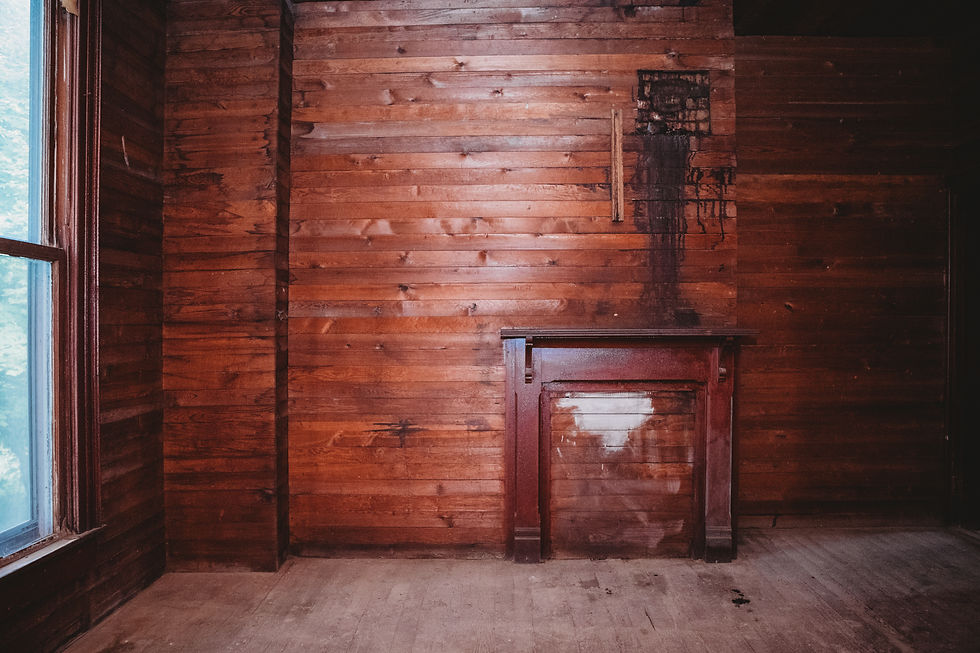
From a demo standpoint, there wasn’t much to remove in any of these rooms.
Most of the work here is focused on preservation. Some boards will come down to be saved and inspected, and we’ll be adding electrical and HVAC, but we’re not replacing these materials with something new.
We’re working with what’s already here.
What it All Means
So the second story, really is…a second story. (See what I did there?)
It wasn’t meant to match the downstairs.
It was built to work.
More practical. Less finished. Designed to shift over time depending on what was needed.
And Maggie held onto that.
Not in a perfect, preserved way. But in a way that still tells a lot about her life and the families that lived here.

While there wasn’t a lot to demo up here, there WAS a lot to save and a lot to discover.
And in a house like this, understanding that difference is what helps you decide what to keep, what to change, and what deserves another beginning.
Of course… that raises a whole new question.
How do you preserve all of this and still add the things it never had?
We’re working on that. Welcome to Reorigination.
Tools We Actually Used for Demo & Cleanup
If you’re tackling your own projects, we've linked a few of the tools we used throughout this process: 👉 Old House Demo: What We Actually Used


Comments