


How Restoring an Old House Changed the Way I Travel

Series 1: Exploring Historic Newport, Rhode Island

This post may contain affiliate links, which means I may earn a small commission if you choose to make a purchase through them, at no additional cost to you. I only share products we have used, love, or would genuinely recommend as you begin your own reorigination.
I don’t think I realized at first that restoring an old house wouldn’t just change our home. Somewhere along the way, it also changed the way I travel.
Before Maggie, most of my trips were probably planned around scenery, entertainment, restaurants, or whatever destination felt exciting at the time. Now, I find myself drawn toward historic towns, preserved architecture, layered spaces, local stories, and places that still feel connected to their past. And if it happens to be on the water too? Even better.
So that’s exactly what led us to Newport, Rhode Island.
And honestly, if you’re here reading this, I have a feeling you probably understand that shift too. I hope the people who follow along with Reorigination are here for more than before-and-after photos. Hopefully you’re here because old houses, old objects, craftsmanship, preservation, and meaningful spaces stir something in you too.
Because once you start loving old homes, I think it permanently changes the way you see places. (If you're new here, you can get caught up on our old house journey here!)

And honestly, after this trip, it felt like the perfect time to start documenting some of these places and the ways restoring an old house continues shaping how I experience them. So this is the beginning of a new travel series through the lens of preservation, architecture, craftsmanship, and all the little details old house lovers can’t help but notice. I also put together a Newport-Inspired collection capturing some of they layered, timeless details that stayed with me long after the trip here!
Arriving in Newport
We flew into Boston on a Thursday morning at an aggressively early hour, grabbed a rental car, and made the drive down into Rhode Island. I had prepared for the obvious differences like the 30-degree temperature drop from Middle Tennessee and packed accordingly with a trench coat that immediately felt fitting for the cool coastal atmosphere we were stepping into.

What I wasn’t expecting was how much of Rhode Island felt rural.
For some reason, I had mentally categorized the Northeast as nonstop city, hustle, traffic, and density. But once we got outside of Boston, the drive immediately slowed down into quiet roads, historic towns, old homes, and stretches of coastal countryside that felt peaceful and lived-in.
It already felt different from the way I used to travel.
Instead of rushing straight into Newport, we intentionally stopped along the way in Tiverton after getting recommendations from locals (who come to find out adorably nicknamed their state, "Little Rhody"). We had lunch at a waterfront restaurant called The Boathouse, where I had my first New England fish and chips experience while staring out over the water, and then wandered nearby antique spots before continuing on.
That has become part of my travel process now too. I’m always looking for places with history, local character, or shops worth slowing down for.
Old house people tend to travel (and google search, lol) differently. We build entire itineraries around atmosphere and the nearest quirky old stuff.
And the closer we got to Newport, the more obvious it became why people are drawn there.
The First Glimpse
My first real wow moment happened before we even officially got into town.
As we came down the highway, the coastline suddenly opened up into bright blue water, rocky edges, sailboats, and huge stretches of daffodils blooming along the roadside.

I audibly gasped. Like literally. I have never seen that many daffodils in my life.
Turns out, Newport is known for Daffodil Days every spring, and even though the trees were still only beginning to green out, the entire area felt alive with tulips and daffodils pushing through the gray coastal landscape.
That contrast became one of the defining visuals of the trip for me: cold ocean air, weathered stone, historic homes, and bright spring blooms everywhere.

Naturally, all I could think about was I needed to immediately plant more bulbs at Maggie.
Newport Feels Intimate
We arrived in Newport around 4 p.m., which is my favorite time of day anywhere. Golden hour at Maggie is magical, and somehow Newport carried that exact same feeling.
The locals told us it was one of the prettiest days they’d had so far that year. There wasn’t a cloud in the sky, the air was cool but comfortable, and the warm evening light made Newport feel instantly charming.

I expected it to feel more crowded, polished, and tourist-heavy, but because we visited just before peak season, it still felt intimate. The harbor, the narrow streets, the cobblestone sections of Thames Street, the tightly packed historic homes, and even the massive mansions somehow still made it feel like people’s hometown and not just a tourist destination.

That balance is part of what makes Newport so interesting historically. While many people know it for the famous Gilded Age mansions built by wealthy families during America’s industrial boom in the late 1800s, Newport itself is much older than that. The city has deep colonial and maritime roots dating back to the 1600s, which means layers of architecture and history exist side by side everywhere you look.
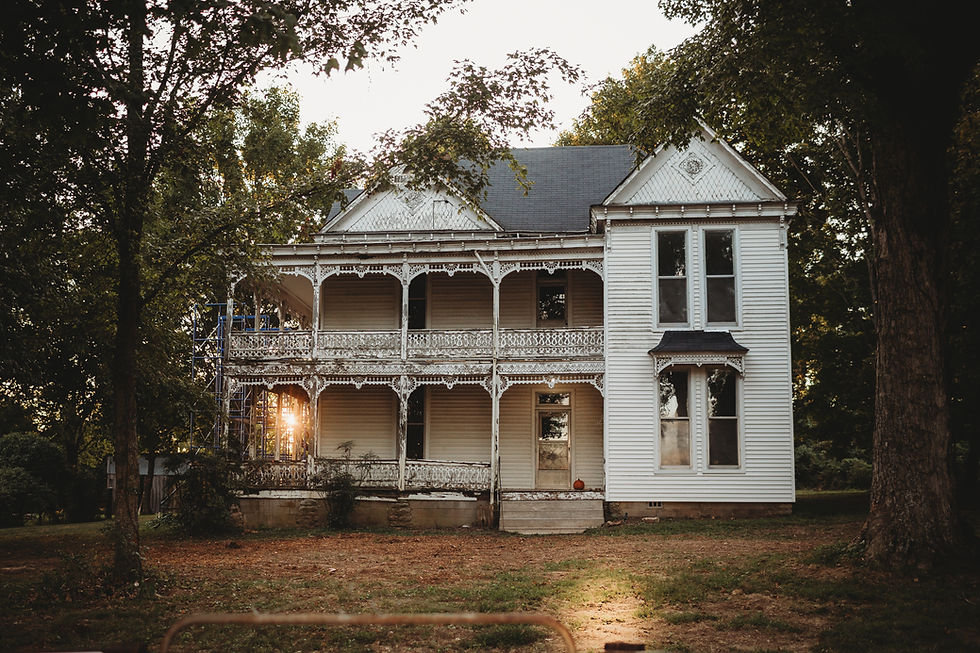
And as someone restoring an 1898 farmhouse, I noticed all of it.
Staying in an Old House Changes Travel Too
One thing that has changed the most since restoring Maggie is where I choose to stay.
I actively seek out old houses now.

Instead of large hotels, I want creaky staircases, original millwork, wraparound porches, fireplaces, antique furniture, stained glass, (maybe a little ghost here and there) and owners who know the history of the building.
So we stayed at the Ivy Lodge, a family-owned bed and breakfast near the mansion district that immediately felt like stepping into another era.

The house itself had all the things old house people love: dark stained woodwork, intricate stair spindles, stained glass, brass sconces, antique furniture, layered wallpaper, fireplaces, and huge windows full of soft natural light.


Even breakfast became part of the experience (even if you wandered down a tad late, haha!)
Every morning started with music playing softly through the dining room while guests gathered around antique tables and bay windows waiting for the homemade breakfast special that was being served that day. It was cozy and communal without ever feeling forced.
That slower pace became one of my favorite parts of the entire trip.
The Cliff Walk at Golden Hour
After settling in, we immediately headed toward the Cliff Walk.

And honestly, I cannot imagine doing it at a better time than the late afternoon into sunset.
The Cliff Walk itself stretches along the rocky coastline behind Newport’s historic mansions, allowing you to experience both the ocean views and the architecture simultaneously. On one side: crashing waves and cliffs. On the other: massive historic homes from the Gilded Age.

But what stood out to me most wasn’t even necessarily the scale of the mansions.
It was the atmosphere.
The light hit the stone, shingles, windows, and gardens in a way that made everything feel timeless. The houses softened into the landscape. Daffodils lined the pathways and properties. The ocean air was cold enough for trench coats and hot coffee.

It felt almost cinematic in the best possible way.
We walked from the 40 Steps area all the way down toward Land’s End before looping back along Bellevue Avenue past the front facades of the mansions themselves. By the end of it we were absolutely exhausted (and maybe hangry), but it was worth every step.

But one thing I couldn’t stop noticing: even these massive historic mansions still had active repairs and maintenance happening everywhere.
Scaffolding. Window work. Landscaping. Masonry repairs.
It reinforced something I think every old house owner eventually learns: old houses are never really “done.”
Not the cottages. Not the farmhouses. Not even the mansions.

And honestly, standing there looking at crews actively maintaining some of the most historically significant homes in the country felt strangely reassuring. Because I get asked all the time when Maggie will finally be finished, and I don’t really think that day exists.
I think continued care is part of the agreement we make when we choose to love and preserve old homes. The reason these places survive for generations is because someone kept choosing them over and over again. That continued stewardship is something we’ve slowly been learning ourselves while restoring Maggie over the last several years. (You can read more about the early stages of our restoration journey here.)
Exploring Newport Slowly

The next few days settled into a slower rhythm of wandering, exploring, eating seafood, driving the coastline, stopping at scenic overlooks, touring historic spaces, and hunting through antique shops.
And honestly, that pace felt perfect.
While driving Newport’s famous Ocean Drive coastal route, it also felt morally impossible not to immediately queue up Yellowcard. (Where my millennials at?)
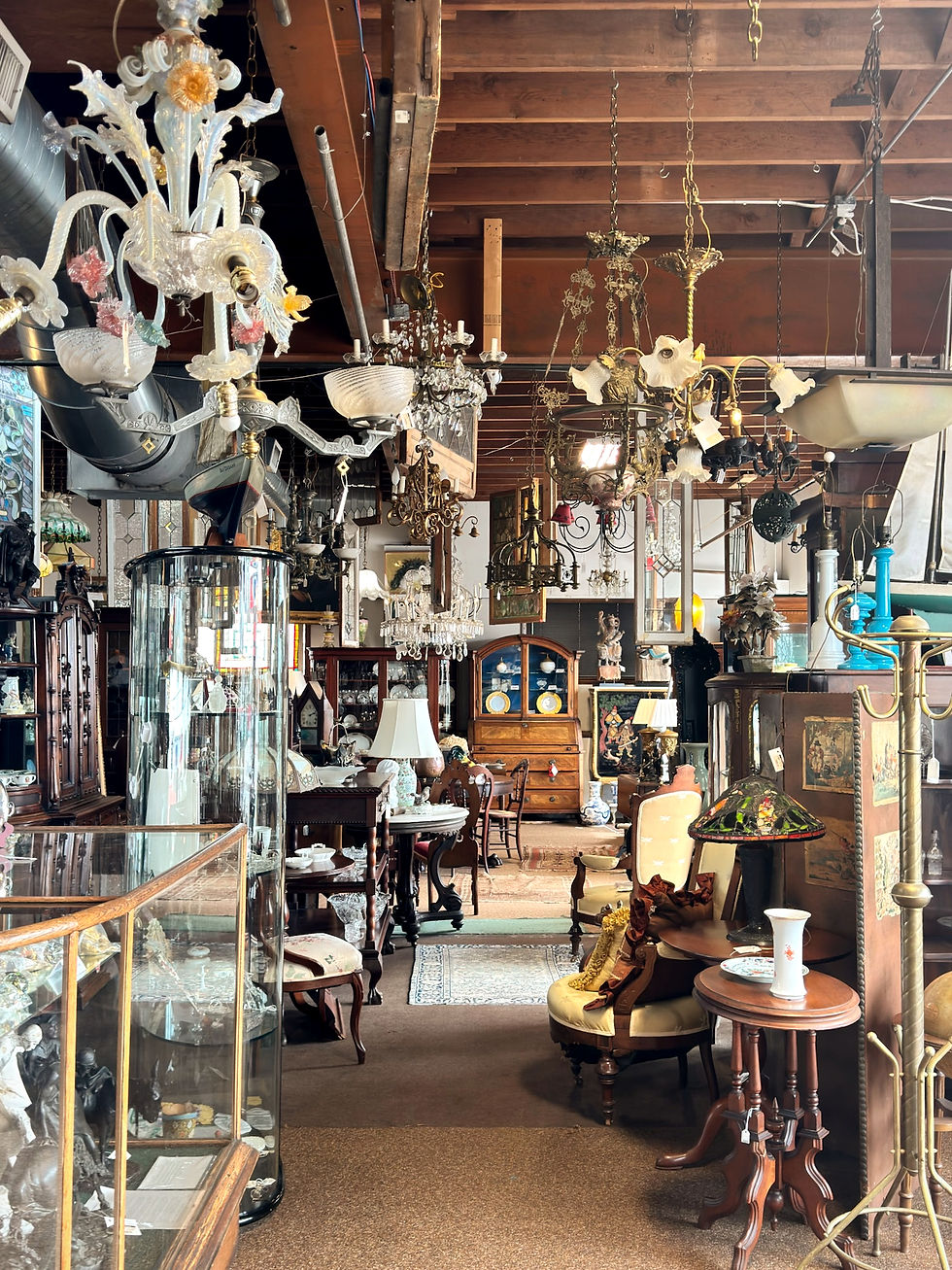
We explored Fort Adams and learned more about Newport’s military and coastal history while walking the Bay Walk Trail, and I had my first lobster roll at a waterfront spot (Belle's) in the Newport shipyard. We then spent the afternoon bopping around antique stores and salvage shops where I found myself studying everything from mantels and fixtures to frames, hardware, books, and architectural salvage.

One of my favorite stops was a massive salvage-style antique store called Aardvark Antiques where I could have spent half the day roaming through all the rooms.
And maybe the clearest sign that old houses permanently rewire your brain: one of the things I was most excited to bring home from my trip was antique hardware screws for some of Maggie's old doorknobs (because somehow those are always the missing piece!)
Not souvenirs.
Not T-shirts.
Tiny antique screws.
That pretty much says it all.
Rosecliff and the Gilded Age
On our rainier day, we finally toured Rosecliff Mansion.
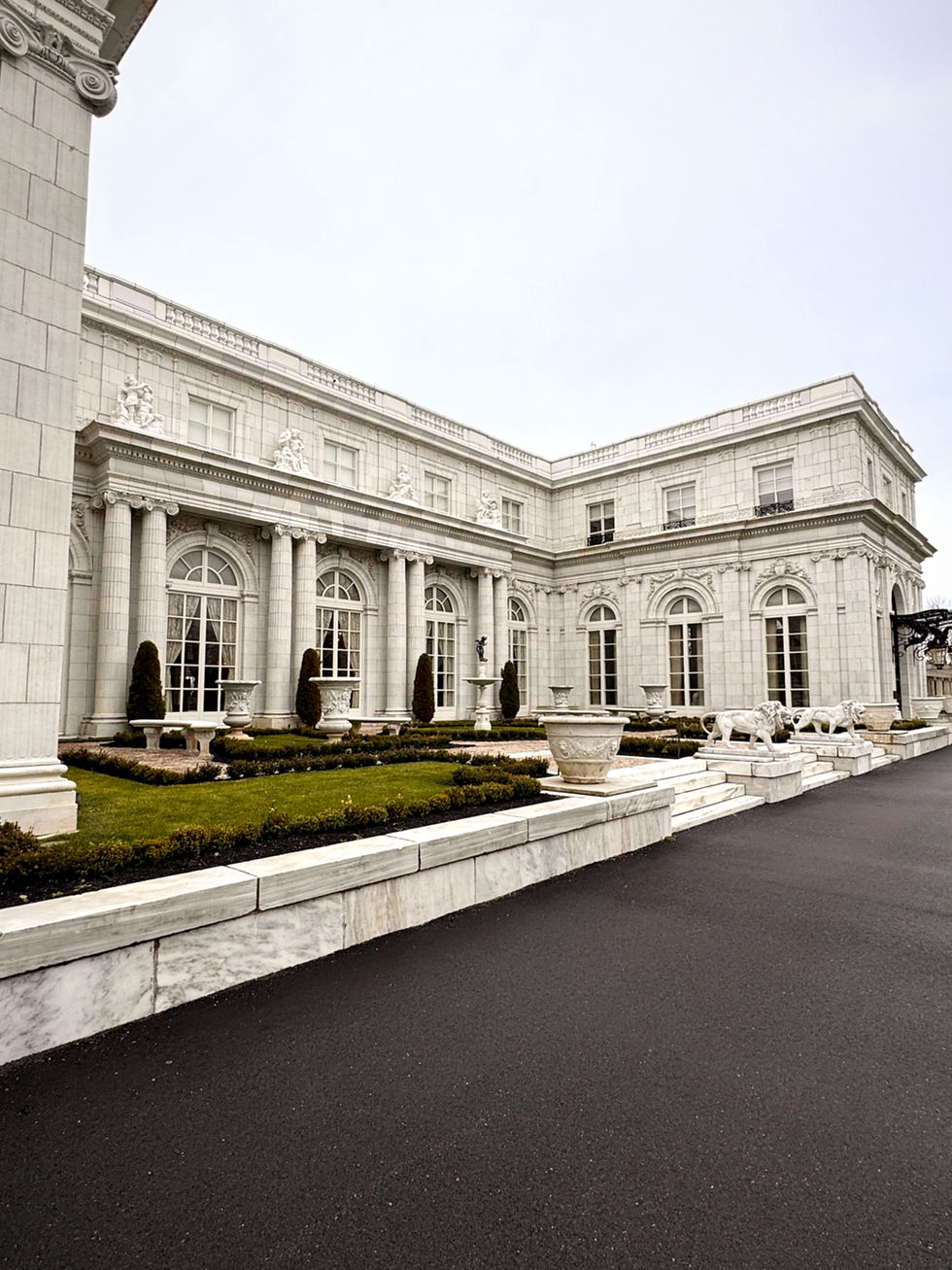
Built during Newport’s Gilded Age, Rosecliff is one of the city’s most famous mansions and was inspired by the Grand Trianon at Versailles. Like many Newport mansions, it represented a period when wealthy families built extravagant summer “cottages” along the coast to escape city life.

And while Maggie is obviously not a Newport mansion, I still found myself noticing all the overlapping influences from the same era: ornate moldings, layered textures, dramatic lighting, brass hardware, dark moody rooms, fireplaces, books, wallpaper, drapery, ceiling relief work, and carefully framed garden views. (I wrote more about what defines a Victorian farmhouse and the architectural details we’ve tried to preserve at Maggie here.)

That’s one thing restoring an old house teaches you too: you stop seeing spaces as trends and start seeing them as compositions.
You notice proportion.
Craftsmanship.
Material choices.
Light.
Mood.
Patina.

You begin studying spaces differently and collecting inspiration. Rosecliff honestly reminded me how much lighting shapes the feeling of a historic space. (I linked some of my favorite historic and vintage-inspired lighting finds here!)
The Layers Beyond the Mansions
One of my favorite parts of Newport though ended up being everything beyond the famous mansions.

The quieter side streets. The harbor buildings. The cemeteries with headstones dating back to the 1700s. The White Horse Tavern, which has stood since 1673. The Wanton-Lyman-Hazard House, one of the oldest surviving homes in Newport. The church where JFK and Jackie Kennedy were married. The narrow streets between Broadway and Thames lined with
historic homes in every variation imaginable.

(And of course, the daffodils continued popping up in every corner of the city, which never got old.)
That’s where the city felt most alive to me.
Because preservation in Newport doesn’t only exist in museum-like mansions. It exists in everyday buildings, local businesses, old neighborhoods, porches, gardens, and homes that continue being lived in.
And I think that’s ultimately what I connected with most.

What Old Houses Teach You
By the time we drove back toward Boston to head home, I realized how much restoring Maggie has changed the way I experience the world.
It changed how I travel. What I notice. What I value. What feels exciting. What feels worth preserving. Trips like this always send me home wanting to study old houses even more, so I linked a few of my favorite preservation and historic home books here.

Newport ended up feeling like the perfect place to begin this series because it so beautifully balances history, preservation, architecture, and everyday life.
I came home inspired by the layered gardens, the historic textures, the old hardware, the stained glass, the coastal light, and the way Newport continues choosing preservation over convenience. And somewhere between the antique bookstores, Cliff Walk sunsets, and tiny doorknob screws tucked into my suitcase for Maggie, I realized that Reorigination was never really just about one house.

The same perspective that shapes Maggie is also beginning to shape the kinds of pieces I’m drawn to source and excited to share with you through "Reoriginated Finds."
It’s about learning to see beauty in things that have already lived a life before us.
It’s about continued care instead of perfection. Preservation instead of replacement. Creating homes that feel layered, personal, and connected to history.
And maybe most importantly, it’s about understanding that old houses don’t just change the way you live. They quietly change the way you see everything else too.


Comments